The Goddesses in Season: Persephone & Bloodroot
- Jill

- Mar 19
- 5 min read

Welcome to Mid-March! With our winter having started so early this year, I’ve felt inspired to begin a blog series centered around spring, yoga, and my upcoming retreat in Greece.
First and foremost, Greek mythology is filled with epic stories that poetically explain the duality of life. The Greek gods and goddesses are never only light or only dark. They are always both. Push and pull, yin and yang… sthira and sukha. Strength and softness. Effort and ease.
Because of that, Greek mythology has always felt like a beautiful parallel to our yoga practice.
In this blog series, I’ll be pulling inspiration from some of my favorite goddesses, weaving their stories together with the changing seasons here in New England, along with gentle yoga practices that reflect the time of year we are in.
To begin, it feels only right to start with Persephone, the Greek goddess of both the underworld and springtime.
In mythology, the reason we have fall and winter is because Persephone must spend part of the year in the underworld with her husband, Hades. When she descends, the earth grows cold and quiet. When she returns, the world begins to bloom again.
My goodness, she must have really missed her husband this year, because winter hit New England early. But this morning, a friend of mine in North Carolina confirmed that the bloodroot has started to sprout — which means our girl is on her way back north.
Persephone is the daughter of Demeter, the great earth goddess of fertility, harvest, and the growing season. Together, their story explains the slow return of life to the earth each spring.

In the myth, when Persephone was taken to the underworld, Demeter was so heartbroken that she refused to let anything grow on the earth. Crops failed, trees went bare, and the world fell into its first winter. Nothing could bloom without Persephone above ground.
Eventually, a compromise was made. Persephone would spend part of the year in the underworld with Hades, and part of the year back on earth with her mother. Every spring she returns, Demeter rejoices, and the earth begins to grow again. Flowers open, trees bud, and the soil softens. Spring and summer exist because Persephone comes back — a joyous reunion of family.
And you can see it happening now, if you look closely.
Tree branches are beginning to reach toward the sun like thin spiderwebs. This isn’t mythology, but a real process called positive phototropism. It's the natural tendency of plants to grow toward light.
The trees are growing. Slowly, slowly.
Early spring is not the season for rushing. Winter was a time for shedding what no longer serves, a time to close in, repair, and rest. Now, with the soil beginning to warm, the first flowers are able to push their way up through the earth.
.

Bloodroot is one of the very first native wildflowers to appear in New England, often blooming before the trees even have leaves. Its white petals open wide in the sun and close again at night, a quiet but powerful sign that the season is changing. You can usually find bloodroot in early April in wooded areas and along shaded trails, especially in places such as (super)southern Maine, Massachusetts, and Connecticut, where the ground begins to warm a little sooner.
Bloodroot feels fitting for the story of Persephone. The plant spends most of the year hidden underground, only appearing for a short time in early spring. When the stem is cut, it releases a deep red sap, which is how it got its name. Because of this, many people have connected bloodroot with themes of life, death, and renewal. Bloodroot is a flower that has to come from the darkness before it can bloom. In its own quiet way, it's a perfect symbol for Persephone’s return from the underworld, and the moment when the earth begins to wake up again.
Along with bloodroot, tiny purple and lavender flowers begin to appear in yards, fields, and along walking paths. Crocuses are often the very first to bloom, sometimes pushing right up through the last patches of snow in March.
In New England, these early flowers show up first in the southern states, and then slowly make their way north. In Massachusetts and Connecticut, crocuses can appear as early as late March, while in New Hampshire and Maine they tend to peak in April. You’ll often see them in old fields, along stone walls, in backyards, and on sunny edges of the woods, the kinds of places where the earth warms first after winter.
Spring reminds us that growth does not have to be dramatic to be real.

How can we connect with this season in our own lives?
Cleaning out closets.
Opening windows.
Starting a new project.
Going for walks.
Getting the body moving again.
Nothing needs to be a big step. This is the time for small and easy.
Even sitting outside for ten minutes and letting the sun hit your face can invite so much spring energy back into the body.
My personal favorite way to encourage that growth?
I’m sure it’s easy to guess… yoga.
Yoga is one of the gentlest ways to wake the body back up after winter. It allows movement without forcing anything, and encourages slow, steady change. A soft practice, where you meet your body exactly where it is, helps the muscles open again without strain.
A simple early-spring practice you can try at home is Chakravakasana, sometimes called a gentle sun salutation.
Start in child’s pose. On your inhale, come to hands and knees. Take a few rounds of cat-cow. On your next exhale, lift into downward dog. On your next inhale, return to hands and knees. On the exhale, come back to child’s pose.
Moving through this slowly feels like the whole mythology of spring... rising out of the earth, returning again, and rising once more. It also helps move stagnant blood and energy through the body after the long winter months.
Another pose I love this time of year is Malasana, the yogi squat. Our hips tend to tighten all winter from sitting and staying inside, and this pose helps gently open them again.
From a wide-legged forward fold, bend the knees slowly and guide the hips toward the floor. Press the elbows into the thighs to deepen the stretch if it feels right.

Finally, my suggestions for early spring are simple.
Find the sunniest spot you can once a day and stretch for ten minutes. Even ten minutes counts as yoga.
Step outside, even if it’s still cold.
Stand in the light.
Take ten slow breaths.
Like the bloodroot, start small.
This fall, when we travel to Greece for retreat, we will be practicing yoga in the same landscape where these myths were first told. Mythologies are often stories always meant to be lived, not just read... <3
Whatever season you are in right now, in nature or in life, try to honor it.
Feel it in your body.
Get outside and feel it in the world around you.
Spring is coming slowly, but it is coming.
And Persephone is on her way back.
thanks,
jill


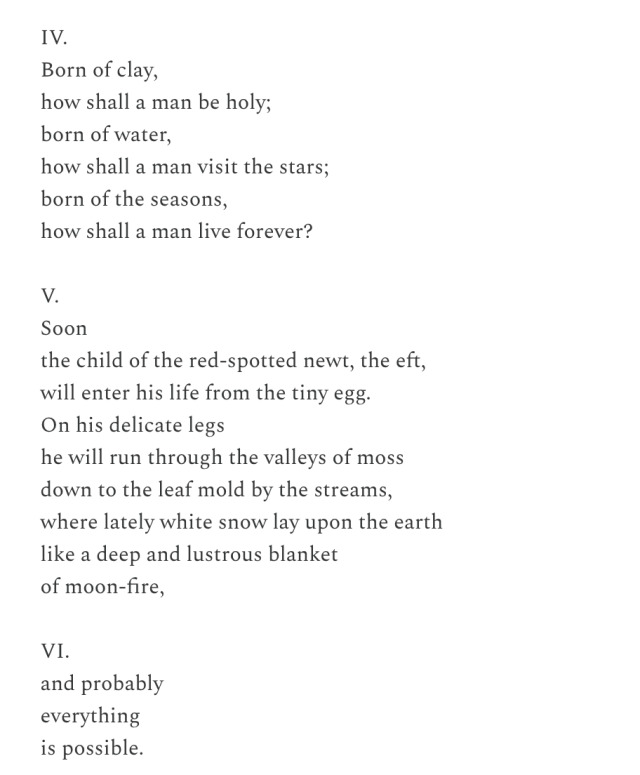
Worm Moon, Mary Oliver
ps, the story of persephone is much more dramatic and powerful! if you'd like a full telling of it.... let me know! i'd be happy to share


Comments